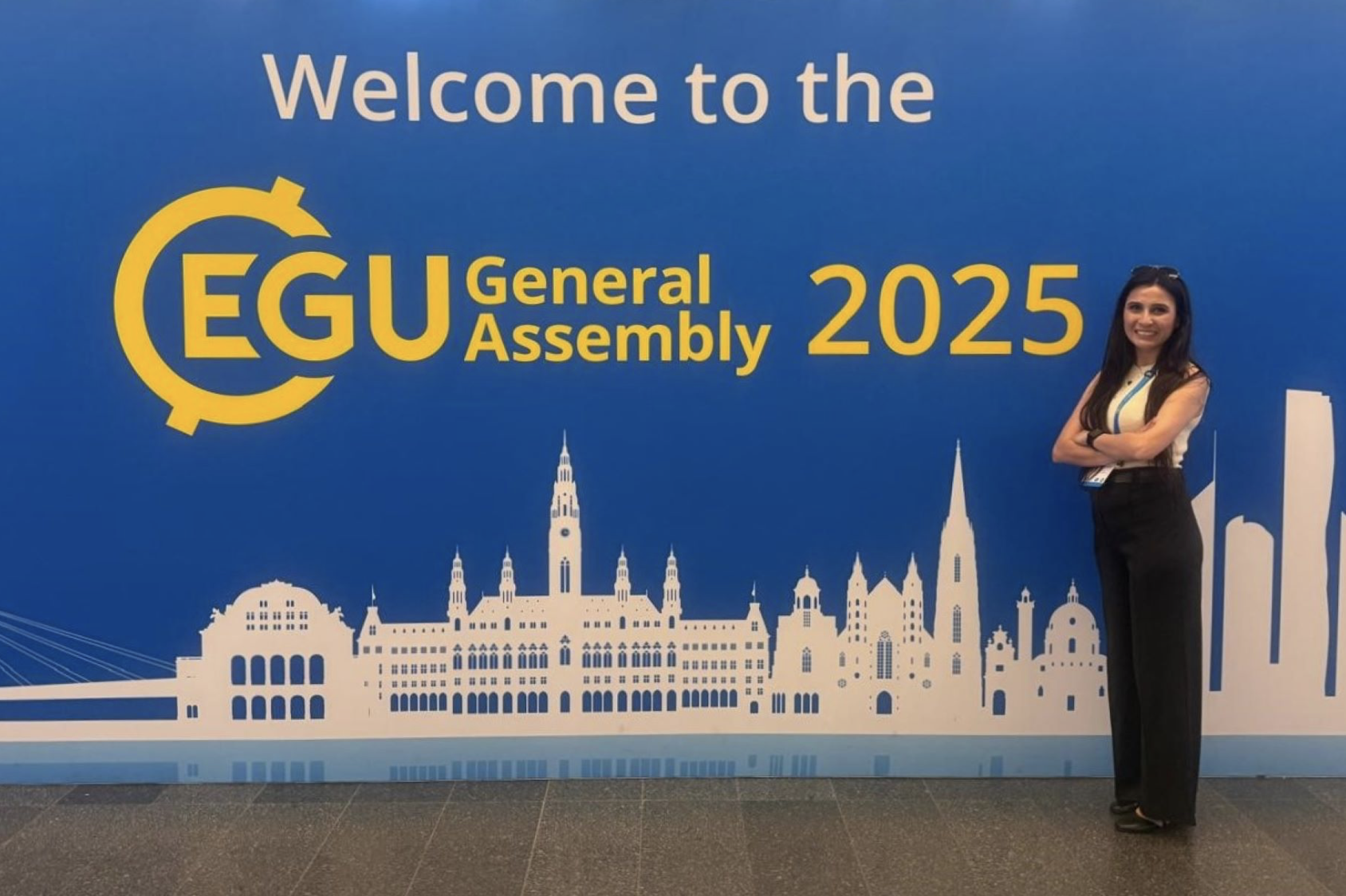
Prevented Ocean Plastic is proud to support academic research. In 2023, we introduced Nazife Oruc Baci– Naz to her friends- whose research to better understand how plastic travels from land towards our waterways and oceans was funded by our programme. Three years on, that support has helped turn an initial question into laboratory experiments, a computer model and published papers. We caught up with Naz to hear what she discovered, what surprised her, and how her findings could help communities identify the biggest opportunities to collect plastic before it reaches the water.
- Hi Naz, when we first spoke in 2023, you were setting out to understand how plastic travels from inland communities towards waterways. Looking back, what can you explain now that you couldn’t then?
“When we spoke one of my main questions was very simple- once plastic is on the ground in a community, what determines whether rainfall can carry it toward a river or the ocean? At that point, we knew this journey from land to water was important, but we did not fully understand what controls it. Three years later, we can explain much more of that process. We now know that it is not simply a question of whether water is flowing. A plastic object may start moving under one set of conditions but need stronger or faster-moving water to keep going.”
- What was the most surprising thing you discovered? Did anything challenge your original expectations?
“One of the most surprising things we found was that once a plastic bottle starts moving, it does not necessarily keep moving all the way to a river or the ocean. During our experiments, a bottle could begin to move with the runoff, travel a short distance, and then stop again. That changed the way I think about plastic transport. It is not always one continuous trip from the street to the waterway. Plastic can move in stages, stopping and collecting in different places along the way. For me, that was important because those temporary stopping points may be places where there is still an opportunity to collect the plastic before it travels farther.
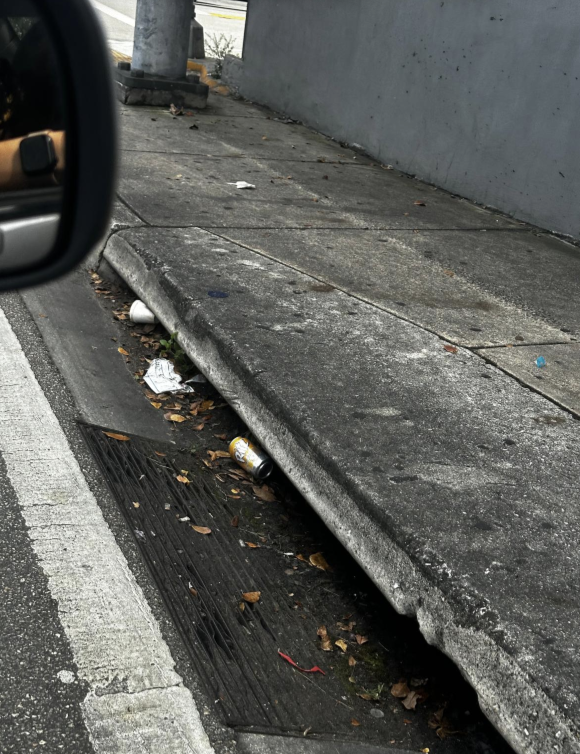
…Movement also depends on the surface it is travelling across and on the characteristics of the plastic itself- its size, shape and weight. We were then able to use these findings to build a computer model and begin exploring how plastic may move through a real urban community during rainfall“
- For someone who has never seen a hydraulics laboratory, what did your bottle experiments actually look like? What were you changing, observing and measuring?
“The experiments were actually quite simple to watch. We used a long, narrow laboratory channel where we could control how much water was flowing. We placed plastic bottles in the channel and watched what happened as the water moved around them. We changed several things during the experiments. We used different bottles, changed the flow conditions, and tested surfaces with different levels of roughness. We also looked at how the position of the bottle affected its movement. What we were watching for was very straightforward- when did the bottle first start to move, how fast did it travel, how far did it go, and did it keep moving or stop again? By repeating the experiments under different conditions, we could start to understand why one bottle might move easily while another stays in place, even under the same flow.
You could actually see the behavior we were trying to understand.
- If a coastal community wanted to use this research to reduce plastic entering its drains or rivers, what practical decisions could it help them make? Or what further testing would be needed before a community could use it to predict local plastic movement?
“This research could help a community think more carefully about where plastic is most likely to move during rainfall and where it may collect along the way. For example, it could help identify areas where litter is more likely to be washed toward drains, where it may become trapped, or where stormwater infrastructure could become an important point for interception. That information could support decisions such as where to focus cleanup efforts, where to place litter traps or other collection systems, and which locations may need more attention before heavy rainfall.
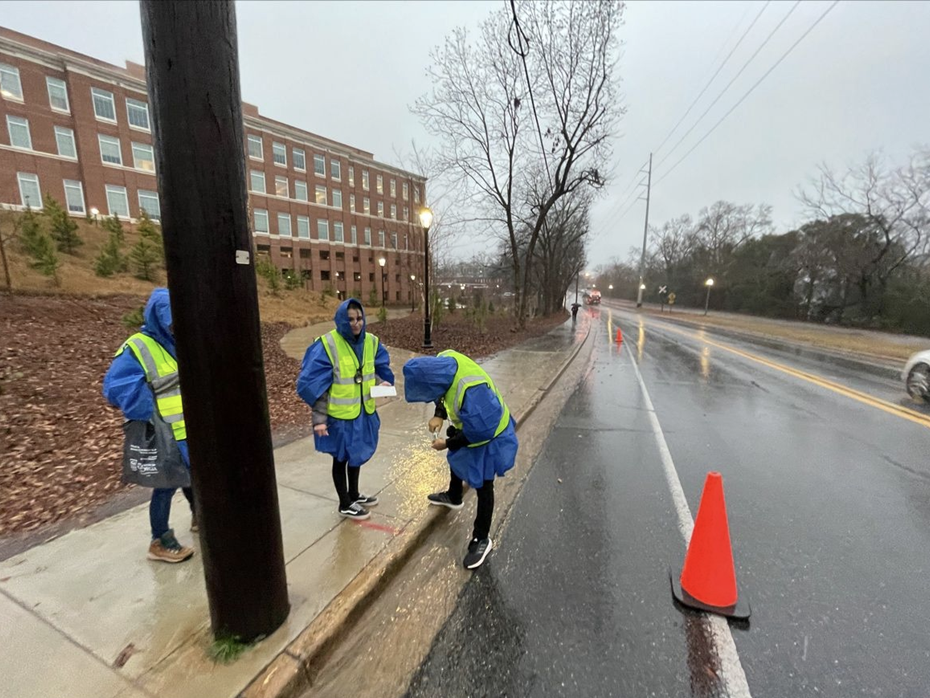
Before using the model to predict plastic movement in a specific community, though, we would need local information. That includes the shape of the land, the surfaces the water flows over, the drainage system, rainfall conditions, and where plastic is actually found. We would also want local observations to check that the model is representing the community realistically. So the research can already help guide where to look and what factors matter most, but local testing is still important before using it as a prediction tool for a particular place.”
- What did Prevented Ocean Plastic’s financial support enable you to do in practice over the course of this research?
“Prevented Ocean Plastic’s support gave me the opportunity to take this research from an idea to something we could actually test and apply. It supported the laboratory experiments where we studied how different plastic bottles move under flowing water, and it gave me the time and resources to develop and test the computer model based on those experiments. From there, we were able to move beyond the laboratory and apply the model to a real coastal community, where we could explore how rainfall, the ground surface and stormwater drains can influence where plastic moves and where it may be trapped.
The support also helped me present the work at conferences and publish the results. Looking back, it really gave me the chance to keep building the research as each new question came up.”
- What would you most want others working in collection and recycling to take away from your findings? Is there something you think we should approach differently now?
“One thing I would want people working in collection and recycling to take away is that plastic does not only matter once it reaches a river, beach or ocean. There are opportunities to act earlier, while it is still moving through streets, drainage areas and other parts of the community. Our findings suggest that it could be useful to think not only about where plastic is found, but also about where it is likely to move during rainfall and where it may collect along the way. Some locations may have a much greater chance of sending plastic toward drains or waterways than others.
So I think the next step is to combine what we already know about where litter is accumulating with information about how water moves through a community. That could help make collection efforts more targeted and give communities more opportunities to stop plastic before it travels farther.“
- What part of your work are you most proud of? What comes next?
“What I am most proud of is how far this research has come, especially considering the challenges we faced along the way. When we started, even finding a reliable way to study plastic movement was difficult. We initially tried conducting experiments outdoors, but natural rainfall and water flow were difficult to control. We eventually moved to a laboratory flume, where we could carefully control the water flow and observe how plastic bottles behaved under different conditions.
We are now planning a new series of experiments at Louisiana State University, where we hope to investigate these more complex behaviors. Understanding how bottles rotate, collide with one another, and move across different surfaces could help us improve FLOTR and better represent what happens during actual storms.
Ultimately, my goal is to help communities identify where they have the greatest opportunity to collect plastic before it reaches waterways. There is still a lot of work ahead, but seeing how much we have learned from the challenges we initially faced makes me excited about what we can achieve.“
About Prevented Ocean Plastic™: POP is high quality, compliant recycled plastic that has been collected from coastal communities at risk of ocean plastic pollution. Used by supermarkets and brands around the world, it meets regulatory health and safety standards, is traceable back to source and can be identified on-pack through its distinctive triangular logo. Prevented Ocean Plastic™ supply major manufacturing partners such as Groupe Guillin, Spectra Packaging, and Berry Global for offerings across multiple product categories, including food and drink, personal care, pet products and home cleaning. Prevented Ocean Plastic™ is an award-winning, three-time Earthshot Prize nominee, and has collected over 2.5 billion plastic bottles from where they don’t belong since 2020