Prevented Ocean Plastic is high quality, fully certified recycled plastic that has been collected from coastal communities in areas at risk of ocean plastic pollution.
Used by supermarkets and brands around the world, it meets regulatory health & safety standards, is traceable back to source and can be identified on pack through its distinctive triangular blue logo.
Prevented Ocean Plastic™ was inspired by the pioneering work of Distinguished Professor of Environmental Engineering and 2022 MacArthur Fellow, Dr. Jenna Jambeck, and her research team.
- The country or region lacks waste management infrastructure and collection incentives.
- The infrastructure is being overwhelmed by population growth or tourism.
- There is a significant risk to wildlife if plastic contaminates their ecosystem.
- It is found within 50km (30mi) distance of an ocean coastline or major waterway that feeds into the ocean.
Jambeck, J.R., Andrady, A., Geyer, R., Narayan, R., Perryman, M., Siegler, T., Wilcox, C., Lavender Law, K., (2015). Plastic Waste inputs from land into the ocean, Science, 347, p. 768-771.
When a bottle hits the water, the truth of the matter is it’s too late.
The sun and the salt water degrade the plastic within a few days, making it largely unusable for recycling. This makes it a clean-up effort, not a recycling effort. This is why we act to ensure that the plastic never reaches the water.

Prevented Ocean Plastic is made from recycled plastic PET bottles (rPET) and produced according to European and North American quality standards.
Prevented Ocean Plastic is the largest programme of its kind.
The Prevented Ocean Plastic programme aligns plastic recycling standards across coastlines at risk from ocean plastic pollution, offering ongoing supply of recycled plastic at industry scale and quality levels while supporting local communities.
Preventing over
1000
of ocean plastic pollution
monthly and growing.
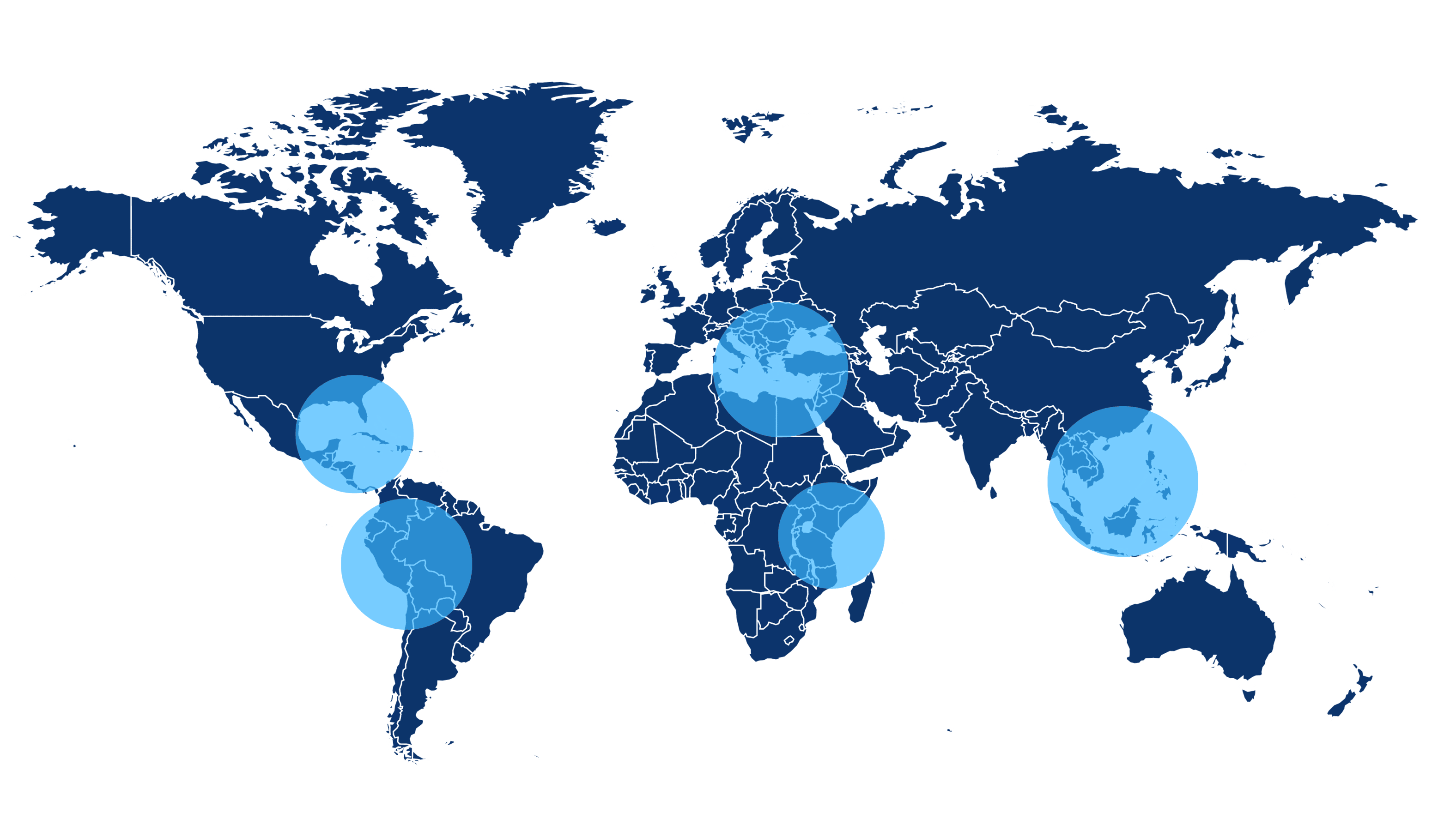
Prevented Ocean Plastic offers brand owners and customers the ability to clearly track the materials in their products back to specific coastal communities in at risk areas, such as:
Southeast Asia, South America and the Galapagos Region, Central America, the Mediterranean, and East Africa.
Everywhere it operates, local business owners and workers inform the development of the Prevented Ocean Plastic Programme to ensure it remains uniquely tailored and most efficient for their specific region.
80% of ocean plastic comes from land-based sources, with most entering the ocean from developing coastal communities.
Eunomia 2016, Jambeck et al. 2015.